DHANTERAS WITH MEANING
Dhanteras beyond buying gold
Markets often reduce Dhanteras to one instruction: buy something shiny. The festival holds a wider conversation about health, household readiness, honest resources, light, gratitude and what prosperity is actually for.

The direct answer
Dhanteras does not require a gold purchase. Jewellery, silver and utensils are familiar customs, but the day also honours Dhanvantari in many traditions and opens the five-day Diwali period. Health, care, useful resources and the responsible use of prosperity belong in the picture.
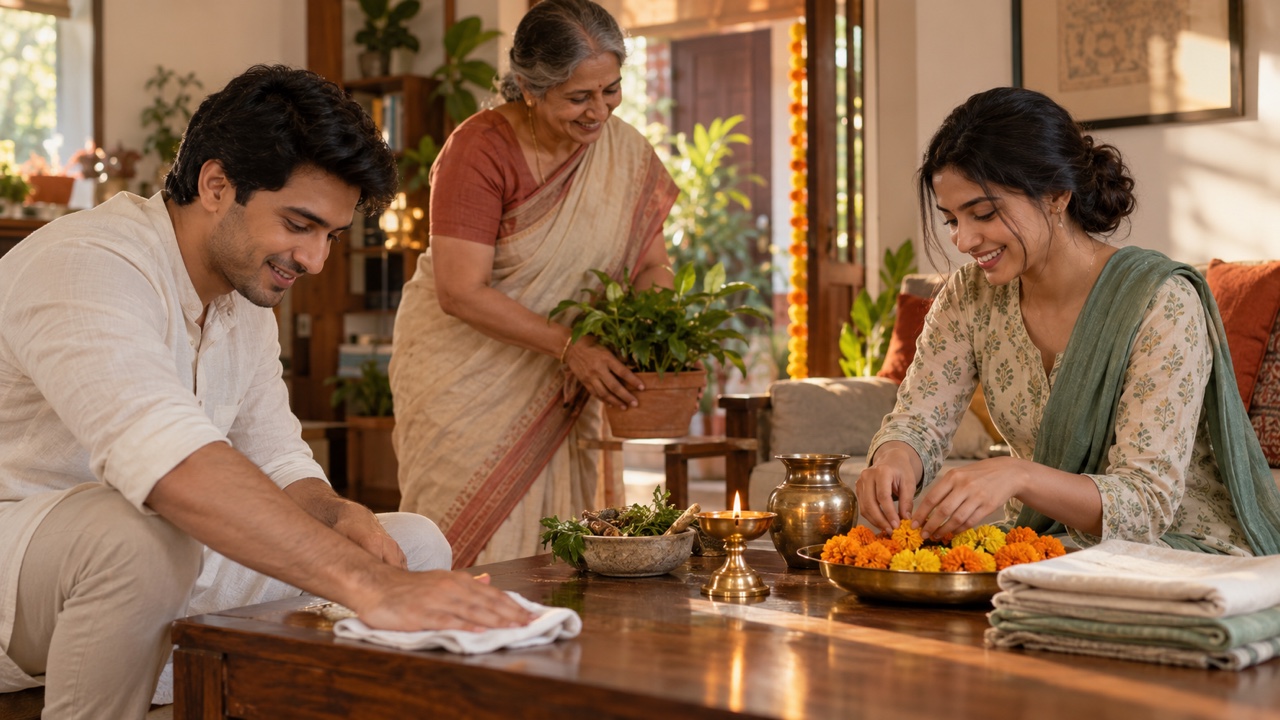
If an expensive purchase would create stress, debt or conflict, it contradicts the household well-being the celebration is meant to support. A cleaned room, repaired tool, safe lamp, shared meal, charitable gift or practical health task can be a sincere observance.
What the name holds
Dhanteras is a common form of Dhantrayodashi. Dhan can point toward wealth or resources, while trayodashi is the thirteenth lunar day. The name does not define wealth as jewellery alone. A household depends on health, food, water, tools, skill, time, trust and the ability to respond when something goes wrong.
The Ministry of Tourism describes Dhanteras as the opening day of the wider Diwali sequence. Contemporary Indian observance includes cleaning and decorating the home, puja, lamps and purchases. Practice varies across regions and families, so no short list should be treated as a universal ritual manual.
Why Dhanvantari changes the emphasis
Dhanvantari is remembered in Puranic tradition as the divine physician who appears during the churning of the ocean carrying a vessel of amrita. Government messages for Dhanteras regularly connect his blessing with health as well as prosperity. That association helps explain why Dhanteras cannot be understood only through shopping.
Health here should not be turned into a medical promise. Lighting a lamp or saying a prayer cannot diagnose illness, replace treatment or guarantee recovery. A grounded observance might instead prompt a delayed check-up, safer medicine storage, a refill of first-aid supplies, a walk with an older relative, or an honest conversation about rest.
Care is a form of wealth because it preserves the people for whom resources matter.
Prosperity is a relationship, not an object
Lakshmi traditions connect prosperity with order, welcome, beauty, generosity and the conditions that allow life to flourish. Cleaning an entrance before lighting a diya has a practical dimension as well as a symbolic one. It asks what the household is inviting and what it needs to clear.
A new utensil can be meaningful because it will be used. An account book can be meaningful because it makes obligations visible. A repaired machine, sharpened tool or reorganised study desk may serve the household better than a ceremonial object bought under pressure.
The question is not simply, “What did we purchase?” It is, “What resource are we ready to use carefully?”
Why buying metal became so visible
Precious metal is durable, portable and culturally associated with family security. Utensils and metal objects also enter ordinary household use. These practices make sense in their own historical and family contexts.
Modern advertising, however, can turn a custom into urgency. A countdown clock, a fear of missing an auspicious minute, or a claim that one purchase will attract wealth is marketing, not proof. Festival language should not hide making charges, purity, storage risk, return terms or the possibility that prices fall.
If you choose jewellery, check hallmarking and the total cost. If you choose a financial product, understand fees, liquidity and suitability. If neither purchase fits, decline without guilt.
Nine ways to observe without expensive shopping
- Clean one entrance, shelf or work area that has been neglected.
- Repair a useful household item instead of replacing it.
- Light a diya on a stable surface, away from curtains, children and pets.
- Review one month of expenses without blaming anyone.
- Organise medicines and safely dispose of expired items according to local guidance.
- Prepare food and share it with someone who would value the company.
- Pay a worker, vendor or family obligation promptly.
- Donate privately to a trusted cause within your means.
- Write down one resource you have and one responsibility that comes with it.
None of these actions purchases divine favour. They simply align the day with care, readiness and gratitude.
A simple family observance
Begin by checking the local date and evening window for the city where you live. Our Dhanteras 2026 timing guide lists Bengaluru, Delhi, Mumbai, Dubai, London and Toronto and explains why their clock times differ.
Before the window, clean the chosen space and gather only what your family normally uses. That may include a lamp, water, flowers, fruit, sweets or a useful household object. Speak the prayers or names familiar to your tradition. Close with gratitude and one practical act of care.
Families outside India should not convert an Indian clock time. Use a location-based panchang, and keep ritual custom separate from the astronomy that sets the window.
Dhanteras meaning questions
Is buying gold compulsory?
No. It is a widespread custom, not a compulsory act or guarantee of future prosperity.
Why is Dhanvantari remembered?
Many traditions remember the divine physician associated with Ayurveda and the amrita vessel, linking the day with health and care.
Can I observe Dhanteras without buying anything?
Yes. Cleaning, repair, lamps, gratitude, family care, charity and a practical household task can all carry meaning.
Will an auspicious purchase make money?
No. Timing does not remove investment risk or replace independent financial checks.
Keep the observance grounded
Have a Dhanteras tradition or timing question?
Share the city and the practice your family follows. Tarashastra can explain the calendar context without pressuring you to buy a remedy or product.
ASK ABOUT DHANTERASEditorial process
Meaning before marketing
Written by Krishna. We separated documented festival customs from advertising claims, treated health as care rather than cure, and kept financial decisions outside promises of auspicious profit.
Sources
Cultural and textual context
- Ministry of Tourism Utsav portal: Diwali, for the five-day sequence beginning with Dhanteras and common household customs.
- Incredible India: Diwali, for the 2026 festival context and household preparation.
- Prime Minister of India Dhanteras greeting, for the contemporary connection between Dhanvantari, health and prosperity.
- Vishnu Purana, for the broader Puranic account of Dhanvantari and the churning of the ocean. Retellings and chapter numbering vary by edition.